

What to see in Formentera in 3 days: a complete guide
Formentera is the smallest inhabited island in the Balearics, but three days is enough to pack in a lot: white sandy beaches, lighthouses perched on cliffs, quiet villages and a turquoise sea. In this guide we suggest a day-by-day route to see the island’s most iconic spots. If you want to discover its coves from the water, boat hire in Formentera sets off from the port of la Savina, where the ferries arrive, and it is a very easy way to add a day at sea to your trip.
Day 1: ses Illetes, es Pujols and sunset at the Barbaria lighthouse
Morning: ses Illetes beach and es Trucadors
Start with ses Illetes beach, on the es Trucadors peninsula, in the north of the island and within ses Salines Natural Park. It is one of Formentera’s most famous beaches and often appears in lists of Europe’s best beaches, thanks to its white sand and crystal-clear water.
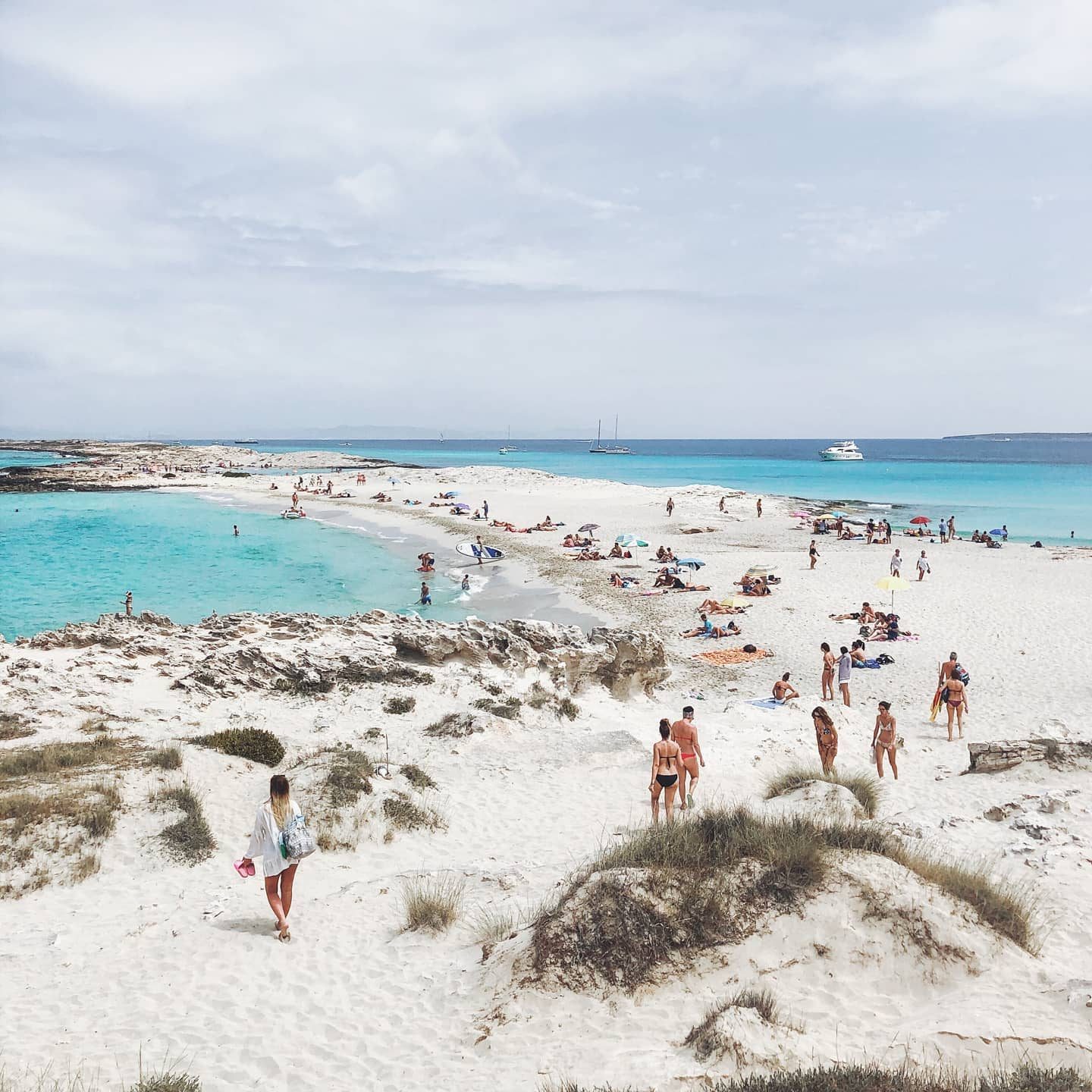
Ses Illetes. Photo: Isla Azul Formentera
What to do at ses Illetes
- Snorkelling: the water is very clear, with posidonia meadows and shoals of fish. At Isla Azul we also run snorkelling trips.
- Walk to the tip of es Trucadors: the spit of sand stretches north towards the islet of s’Espalmador. Note: crossing on foot to s’Espalmador is prohibited.
- Relax on the beach: only cross the dunes on the boardwalks, as they are protected.
How to get there: on foot or by bike along the La Savina – ses Illetes green route (3.3 km), by bus from the port, or by car or motorbike. From May to mid-October, entry to the natural park by car or motorbike is capped and non-residents have to pay; on foot, by bike or in an electric vehicle it is free.
Lunch: eat at ses Illetes or Llevant
At ses Illetes you will find Juan y Andrea, a classic with more than 50 years of history, known for its salt-baked fish. On the other side of es Trucadors, on Llevant beach, Tanga has been serving Mediterranean cooking, fish and rice dishes by the sea since 1978. In high season it is best to book.
Afternoon: es Pujols
After your swim, head to es Pujols, on the north coast next to the Estany Pudent. It is one of the island’s busiest resorts, with a seafront promenade, terraces and a beach.
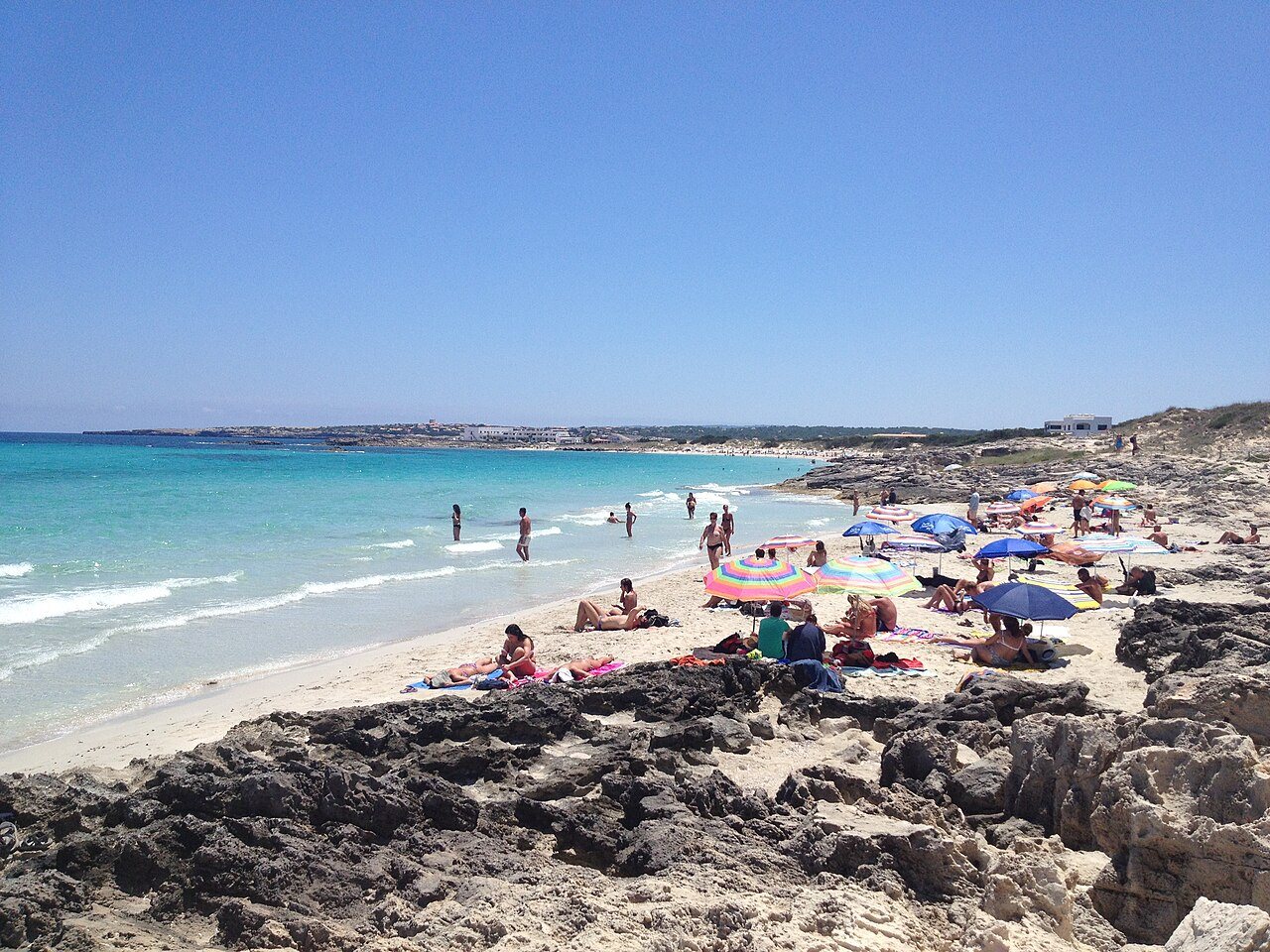
Es Pujols. Photo: User:Ireireire, CC BY-SA 3.0
What to see and do in es Pujols
- Seafront promenade: bars, shops and a laid-back atmosphere.
- Es Pujols beach: lifeguards are on duty in season.
- Night market: from May to October it opens every evening on the promenade, with crafts and souvenirs.
Sunset: Cap de Barbaria lighthouse
End the day at the Cap de Barbaria lighthouse, at the island’s south-western tip, on top of a cliff about 100 metres high. It is the lighthouse that appears in Julio Medem’s film Sex and Lucía, and one of the best places to watch the sunset.

Cap de Barbaria lighthouse. Photo: El Periódico (Viajar)
Tips
From 15 May to 15 October you cannot drive all the way to the lighthouse: you have to leave your vehicle in the Tanca d’Allà Dins car park, before the barrier, and carry on on foot or by bike. Arrive in good time and climb down into the Cova Foradada, a cave next to the lighthouse with an opening onto the sea. You get in through a hole in the ground, so take care.
Day 2: Sant Francesc, Cala Saona and la Mola
Morning: Sant Francesc Xavier
Stroll around Sant Francesc Xavier, the island’s capital, a few kilometres from the port of la Savina.
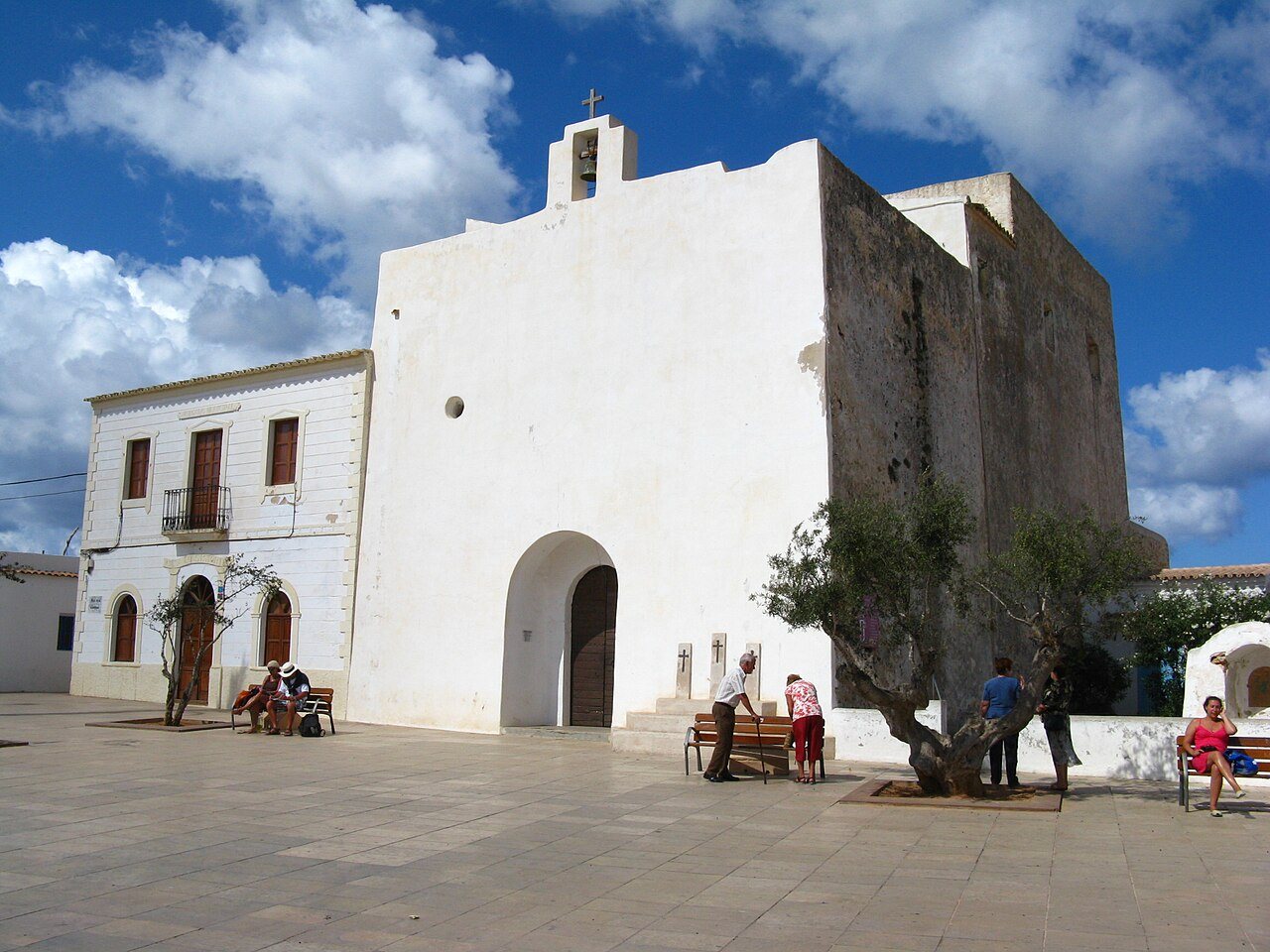
Sant Francesc Xavier square. Photo: Marcin Janeczek, CC BY 3.0
What to see
- Church of Sant Francesc Xavier: a plain, whitewashed 18th-century fortified church that also served as a refuge from pirate attacks.
- Formentera Ethnographic Collection: a permanent exhibition on traditional island life, with free admission.
- Market: from May to October there are craft stalls in the morning.
- Café terraces on the square: a good spot for breakfast.
Lunch: Cala Saona
Carry on to Cala Saona, on the west coast: a sandy cove about 140 metres long between the cliffs of Punta Rasa and Caló d’en Trull, with turquoise water and sunset views.
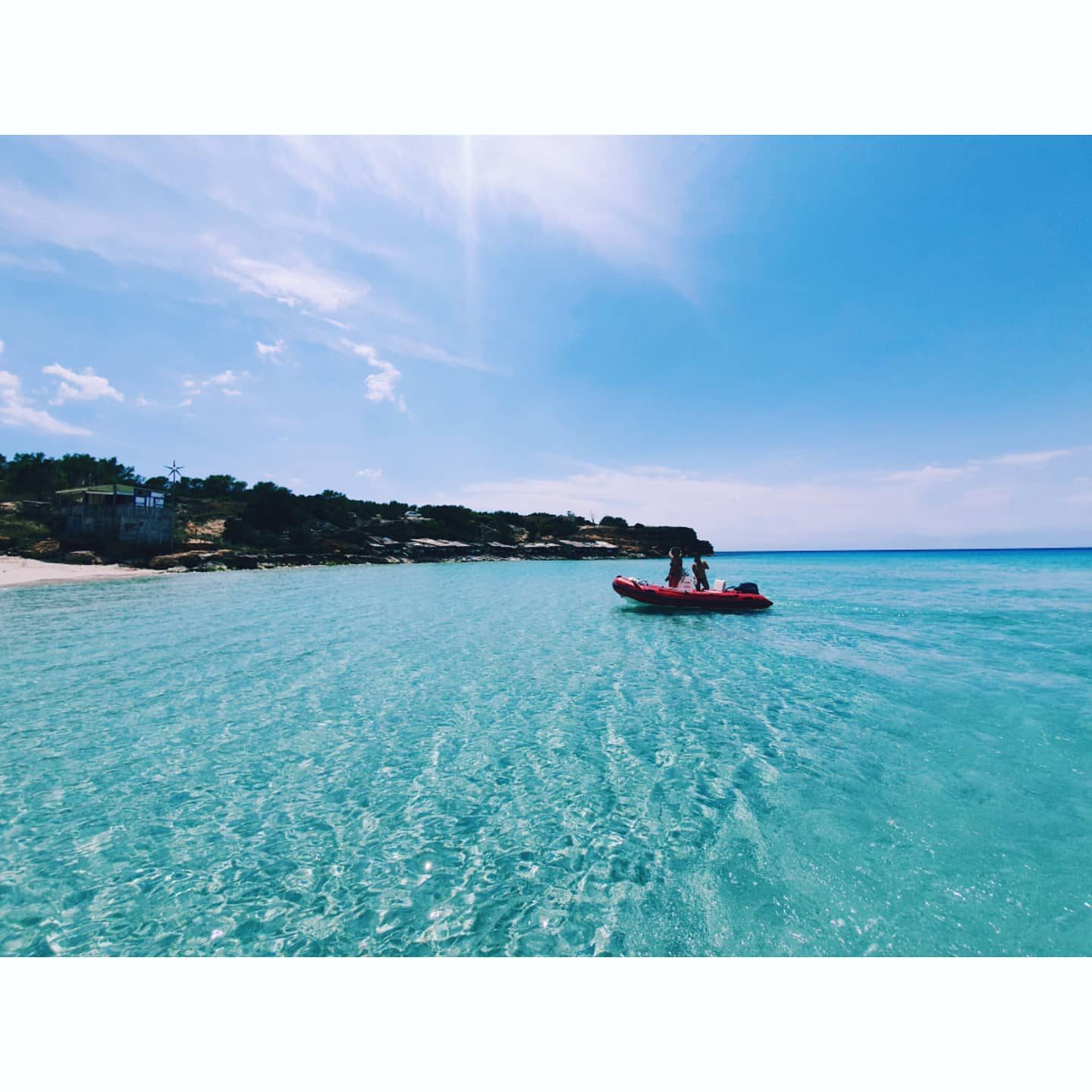
Cala Saona. Photo: Isla Azul Formentera
What to do at Cala Saona
- Kayaking, paddleboarding and snorkelling: paddle towards Punta Rasa and you will reach its sea caves.
- Eat by the cove: Sol restaurant, set among the rocks, serves Mediterranean cooking; at the Cala Saona hotel, chef Ramón Freixa runs a daytime beach bar and the Sol Post restaurant, which is open for dinner only.
Afternoon: el Pilar de la Mola and its lighthouse
In the afternoon, head up to the la Mola plateau, the highest part of the island, to el Pilar de la Mola. If it is a Wednesday or Sunday between May and October, wander round its craft market, which opens in the afternoon.
La Mola lighthouse
The lighthouse stands at the island’s eastern tip, on cliffs more than 100 metres high. The views over the Mediterranean are breathtaking and, as it faces east, it is a great place to watch the sunrise if you are an early riser.
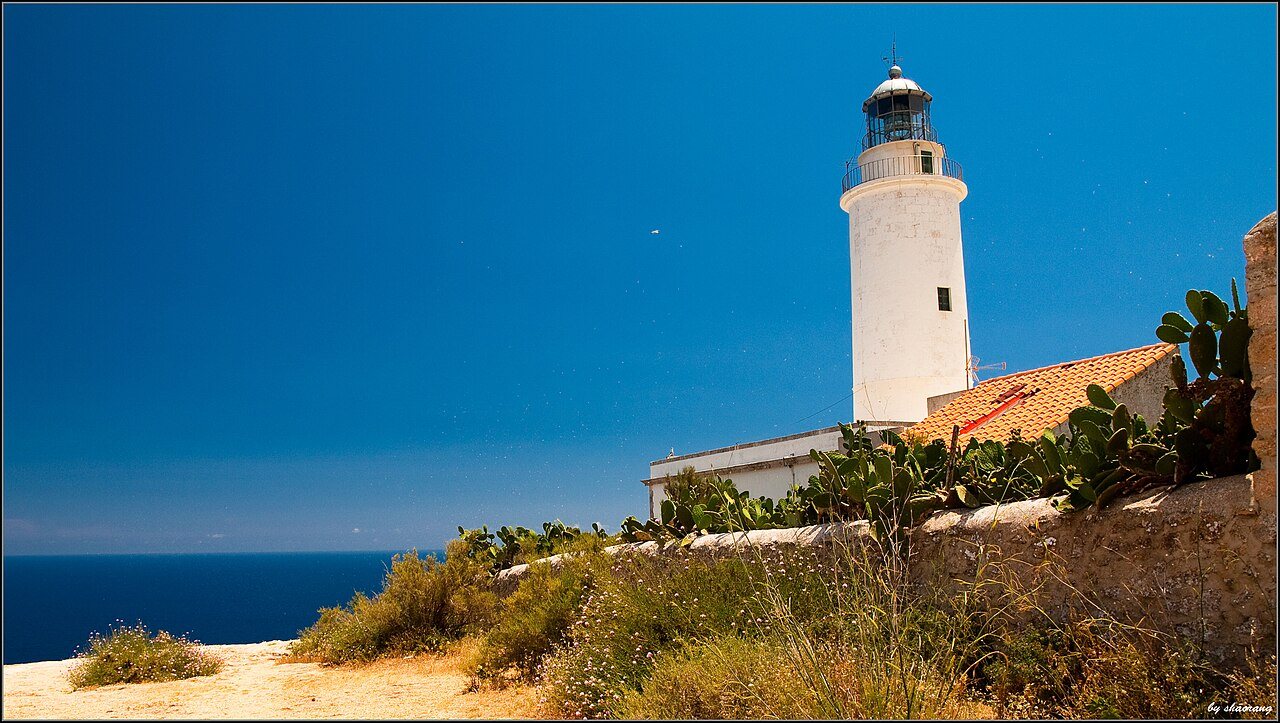
La Mola lighthouse. Photo: shaorang from Puerto de Santa Maria, Cadiz, España, CC BY-SA 2.0
Day 3: ses Salines Natural Park, Migjorn and es Caló
Morning: ses Salines Natural Park
Your last day begins in ses Salines Natural Park, which protects the salt pans, lagoons and dunes in the north of the island.
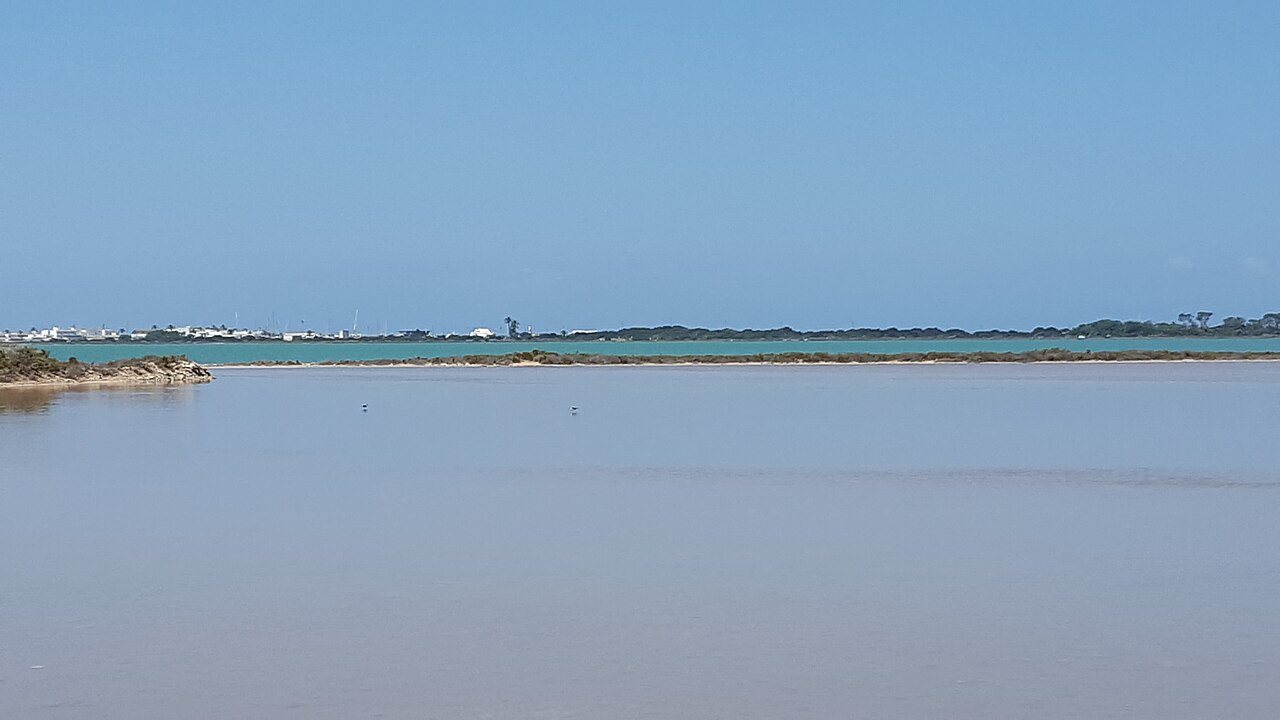
Estany Pudent, ses Salines Natural Park. Photo: Formesar, CC BY-SA 4.0
What to do
- Bike ride: the park’s green routes are flat; the one from La Savina to ses Illetes is 3.3 km long.
- Birdwatching: at the Estany Pudent you can see flamingos and other waterbirds.
- Estany Pudent and Estany des Peix: the first is a hypersaline lagoon (swimming is prohibited); the second is a lagoon open to the sea through sa Boca, with a regulated anchorage.
Lunch: Migjorn beach
Spend the middle of the day at Migjorn, the longest beach on the island: around 5 km of sandy and rocky coves on the south coast, with sandy seabeds and shallow water.
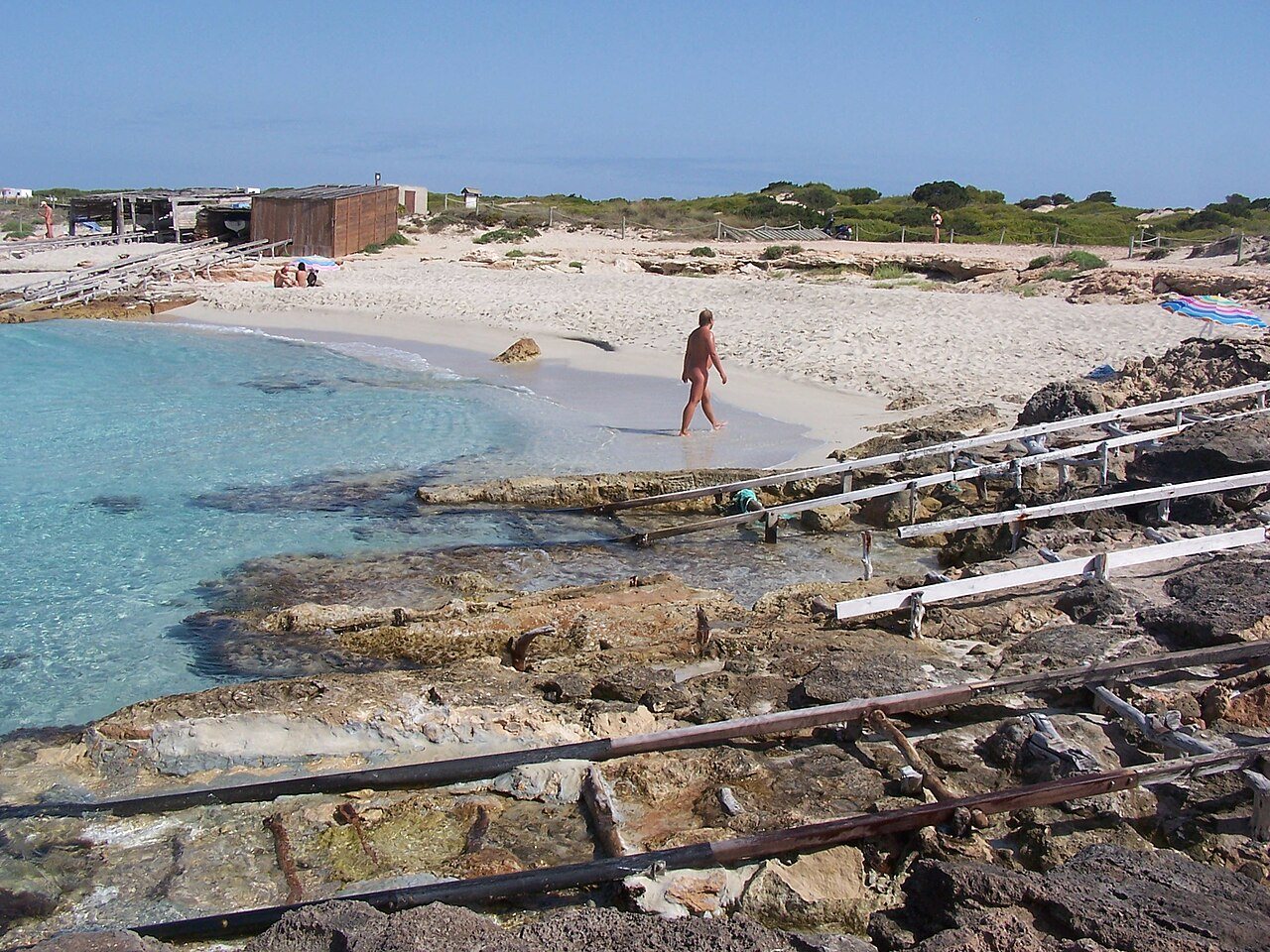
Migjorn beach. Photo: diluvi.com Anna i Adria, CC BY 2.0
Where to eat in Migjorn
- Sa Platgeta: traditional cooking since 1978, with fish, seafood, ensalada payesa (the local farmhouse salad) and rice dishes.
- Es Còdol Foradat: chef Nandu Jubany’s “formal beach bar”, with charcoal grilling, rice dishes and island produce.
- KM11 and Amar: two simple beach bars with a relaxed vibe, on the former sites of the Pirata Bus and the Lucky.
Afternoon: es Caló de Sant Agustí
Finish at es Caló de Sant Agustí, a small natural harbour on the north coast, at the foot of la Mola, with slipways for the fishing boats.
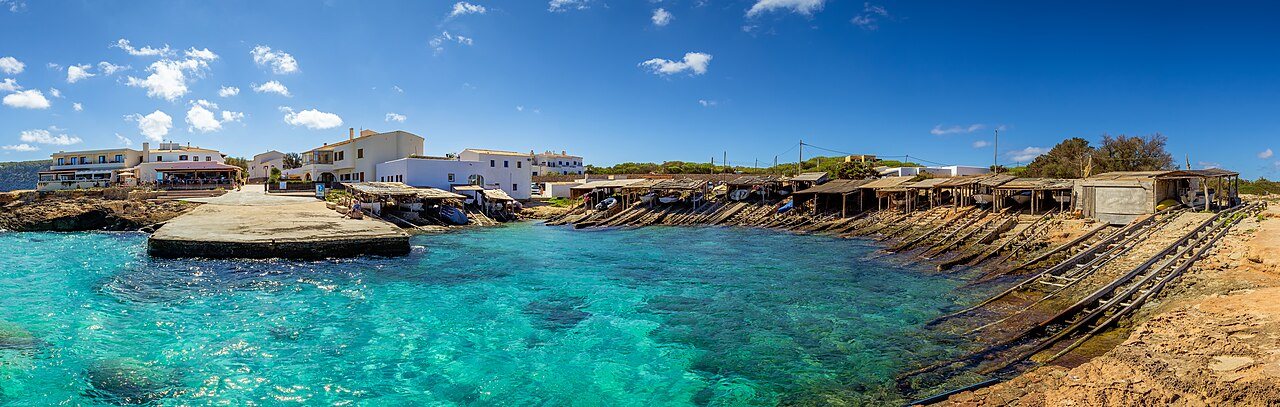
Es Caló de Sant Agustí. Photo: Fabian Hurst, CC BY-SA 4.0
What to do in es Caló
- Stroll around the harbour: look out for the traditional boat slipways.
- Dinner at Can Rafalet: a historic guesthouse and restaurant with a terrace by the harbour, known for its rice dishes.
- Camí de sa Pujada: if you still have the energy, walk up a stretch of this historic path (a 4 km green route, high difficulty), which was used to climb up to la Mola before the current road existed. The views of the island are spectacular.
Tips for making the most of 3 days in Formentera
- Get around by bike, motorbike or bus: the island is small. If you want to bring your car over from Ibiza in summer, you need prior authorisation (formentera.eco).
- Sun protection: the sun is strong even in spring and autumn.
- Book ahead: in high season, secure a table at the best-known restaurants.
- Bring snorkelling gear: Formentera’s water deserves to be seen from below. If you fancy trying scuba diving, Formentera Divers, in la Savina, is the island’s go-to dive centre.
- If you go out by boat: only anchor on sand, never on posidonia (it is prohibited in the Balearics), and remember that the navigation licence only allows daytime sailing. You can book your boat at reservas.islazulformentera.com.
A perfect getaway to Formentera
In three days you can see the best of Formentera: its most famous beaches, its lighthouses, its villages and its wildest coastline. The key is to combine time on the beach with walks, good food and, if you can, a day at sea.

