

Racó de s’Alga (s’Espalmador) and Formentera’s casa payesa
Racó de s’Alga is one of the most beautiful and peaceful beaches in the Pitiusas. It lies on s’Espalmador, the islet just north of Formentera, and has kept an almost untouched landscape of sand and turquoise water. In this guide we tell you where it is, how to get there and what to bear in mind, and we also take the opportunity to explain what a casa payesa is: the traditional rural house of Formentera and Ibiza. As s’Espalmador can only be reached by sea, the easiest way to go is boat hire in Formentera.
Where is Racó de s’Alga?
Racó de s’Alga is in s’Alga bay, on s’Espalmador, an islet to the north of Formentera, opposite the tip of es Trucadors and ses Illetes. S’Espalmador is part of the ses Salines Natural Park of Ibiza and Formentera, and its Posidonia meadows are protected.
It’s worth knowing that s’Espalmador is privately owned and practically uninhabited. You can enjoy its beaches, but respect the private areas and the natural park’s rules.
How to get to Racó de s’Alga
It can only be reached by sea. Don’t try to wade across from es Trucadors: the currents are strong and it is forbidden.
- By boat: s’Alga bay has a regulated mooring field, where you must tie up to one of the official buoys. Check the conditions before you set out on the Balearic Government’s Posidonia website.
- Qualifications: from 1 October 2026 you need a boating qualification to skipper a hire boat (at the very least, the licencia de navegación, valid for daytime sailing only). If you don’t have one, you can go out with a skipper.
What to do at Racó de s’Alga
This is a beach to enjoy at a leisurely pace: sunbathing, swimming in clear water and snorkelling. Bring water and everything you need, and take your rubbish home with you.
For years the mud bath in the s’Espalmador pond was famous, but the natural park’s rules expressly forbid it. Respect the signs and stay out of the mud.
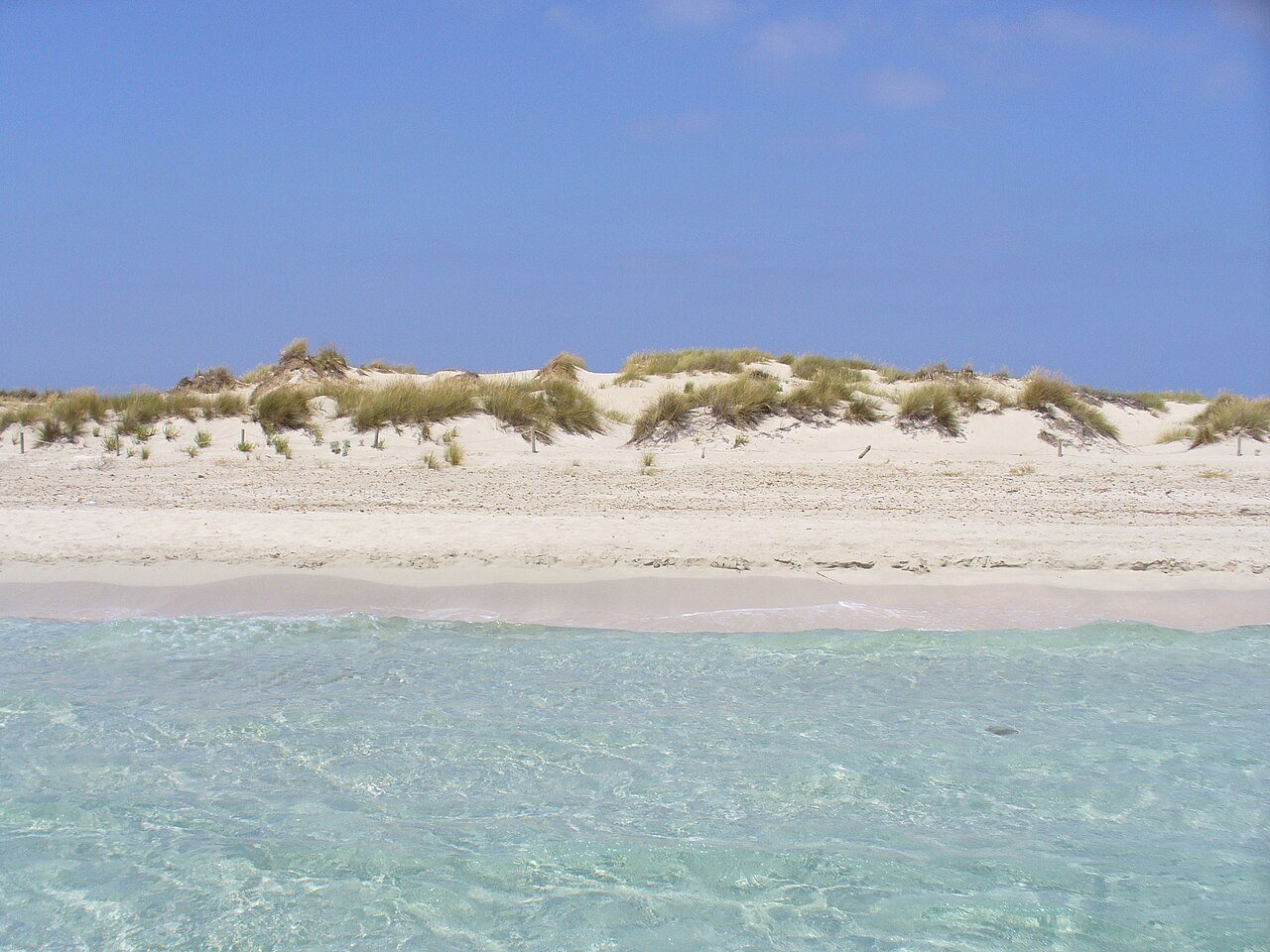
Platja de s’Alga, on s’Espalmador. Photo: Samu from Alpedrete, Spain, CC BY 2.0
What is a casa payesa?
The casa payesa is the traditional rural house of Ibiza and Formentera. In Formentera, this type of house spread across the countryside between the late 19th and mid-20th centuries, and it stands out for its simplicity and the way it blends into the Mediterranean landscape.
Features of the Formentera casa payesa
- Load-bearing walls of local stone.
- Floors and roofs supported by wooden beams.
- Walls and roofs finished with lime, which gives them their characteristic white colour.
- Simple volumes that were adapted over the years to each family’s needs.
If you’re interested in traditional architecture, walk or cycle Formentera’s green routes, which cross farmland and dry-stone walls: the rural landscape the casa payesa belongs to.
Tips for your visit
- Check the weather forecast and sea conditions before setting out.
- Always tie up to the buoys in the regulated mooring field; in the Balearic Islands it is forbidden to anchor on Posidonia.
- Respect the island’s private property and the natural park’s protected areas.
- Bring water, sun cream and a bag for your rubbish.
Spending a day at Racó de s’Alga is a way to experience Formentera at its most authentic: nature, peace and quiet, and a picture-postcard sea. Don’t forget your camera.

