

Formentera and its history: from prehistory to the present day
A look back at the history of Formentera, from its first inhabitants more than 4,000 years ago to its rise as one of the most special destinations in the Mediterranean.
A small island with a big history
Today Formentera is known for its beaches, its tranquillity and its landscape. But its history goes far beyond tourism: it is a story of isolation, abandonment and resettlement, of centuries in which its people lived off the land, the sea and salt.
The first settlers (late 3rd millennium BC)
The earliest signs of permanent human presence in Formentera date from the late 3rd millennium BC. The great witness to that era is Ca na Costa, a megalithic collective burial tomb built between 2000 and 1600 BC and one of the most important prehistoric monuments in the Balearics. Discovered in 1974, it lies between the Estany Pudent and es Pujols, and access is free. Its stone slabs, arranged in circles around the chamber, give it a star shape; on the island it is known as es Rellotge (“the clock”).
The stone huts and enclosures at Cap de Barbaria (Cap de Barbaria I, II and III), at the southern tip of the island, also date from the Bronze Age.
Phoenicians, Carthaginians and Romans
Phoenicians and Carthaginians frequented its shores, and in Roman times the island depended on Ebusus, present-day Ibiza. The Romans called it Frumentaria, “the island of wheat”, because of its role as a granary; that is where the name Formentera comes from. The most important site from this period is the castellum de Can Blai, a small late Roman fort.
Then came centuries of Andalusi (Moorish) rule, which left their mark on place names, wells and the way the land was farmed.

Es Cap II prehistoric settlement. Photo: C.C. / Diario de Ibiza
From the Catalan conquest to abandonment (13th-17th centuries)
In 1235, troops led by Guillem de Montgrí conquered the Pityusic Islands, and Formentera became part of the Crown of Aragon. But between the 14th and 17th centuries the island was left practically uninhabited: plague, poor harvests and, above all, attacks by Barbary pirates made it impossible to live there permanently. During that time it was used from Ibiza for grazing and for extracting salt.
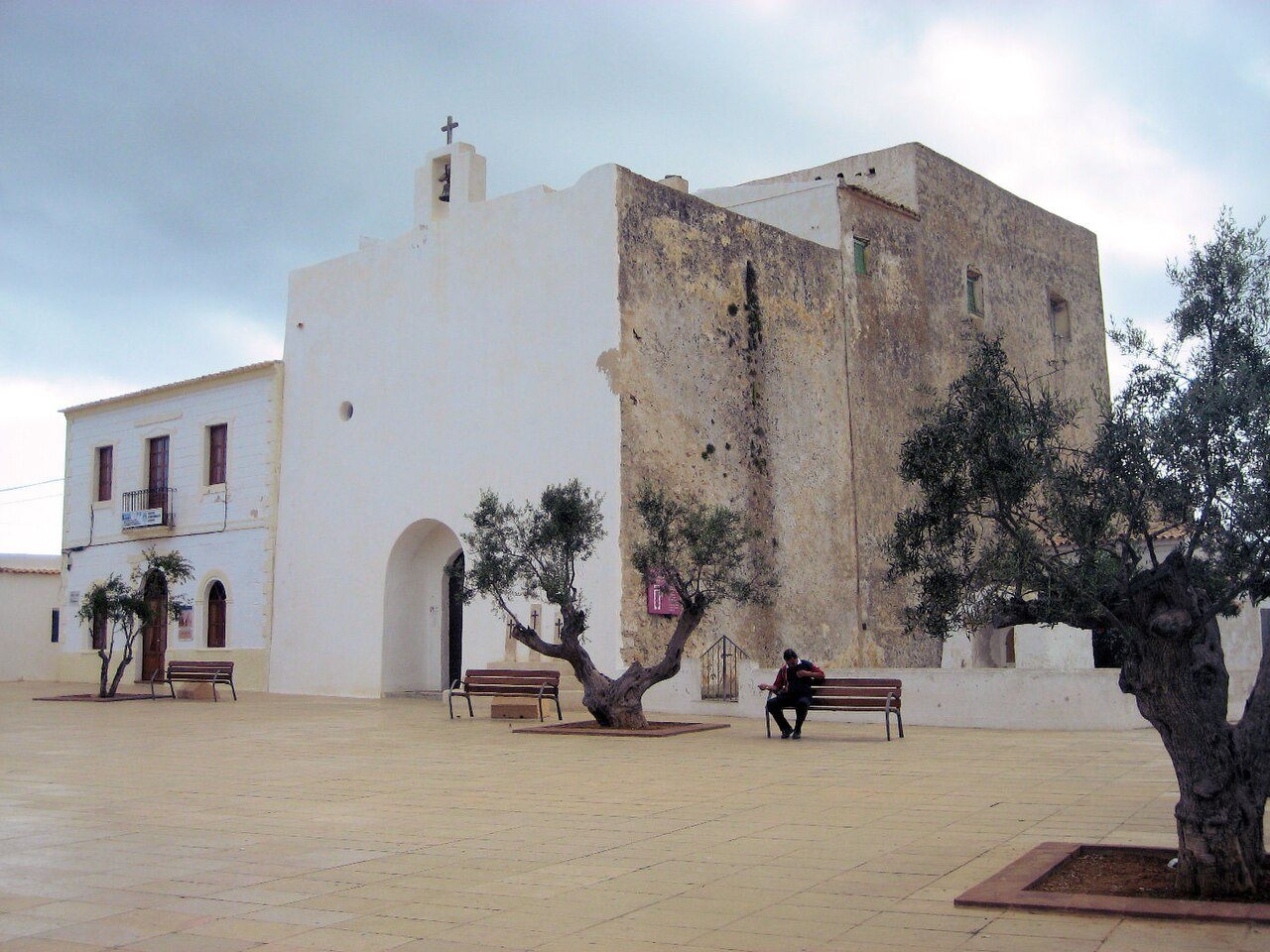
Church of Sant Francesc Xavier (18th century). Photo: Vriullop, CC BY-SA 3.0
Resettlement (late 17th and 18th centuries)
Permanent resettlement began at the end of the 17th century: in 1697 the Crown granted Marc Ferrer the right to resettle the island, and settlers arrived from Ibiza. During the 18th century they built fortified churches that also served as refuges, such as the one in Sant Francesc, and watchtowers along the coast (sa Gavina, des Garroveret, des Pi des Català, Punta Prima) to warn of approaching pirate ships. Wells, waterwheels and cisterns made a very dry land habitable.
19th and 20th centuries: land, sea and salt
Throughout the 19th century and much of the 20th, Formentera lived on a subsistence economy: people farmed, fished, and the salt from ses Salines was the main source of income. Life was hard and many Formenterans had to emigrate.
The traditional farmhouses (cases payeses) were small survival systems: rainwater was collected in cisterns, animals were raised and everything the land produced was put to use.
The turning point: the 1960s and 70s
In the 1960s and 70s, artists and countercultural travellers arrived on the island, drawn by its beauty, its tranquillity and its simple way of life. Formentera became forever linked with the bohemian spirit of that era, and over time tourism became the driving force of its economy.
Formentera today
The island has changed, of course, but it has made a point of protecting what makes it unique. Today it follows a tourism model that looks after its clean waters and its posidonia meadows: in summer it limits the number of vehicles coming in from outside, regulates car access to areas such as ses Illetes and Cap de Barbaria, and prohibits anchoring on posidonia.
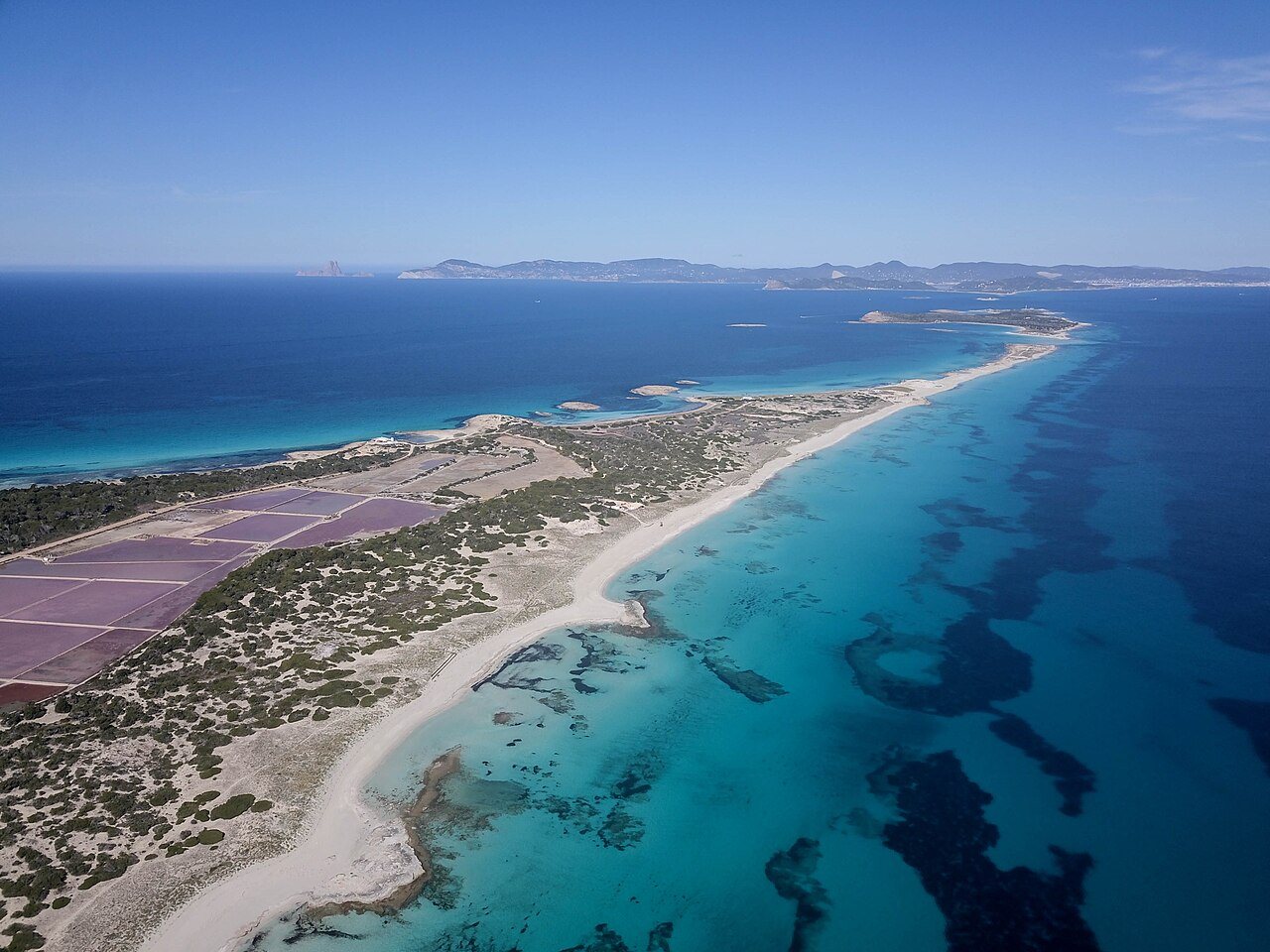
Formentera from the air. Photo: Beni Marull, CC BY-SA 4.0
You can still wander along dirt tracks, see centuries-old fig trees and find almost empty beaches at sunrise. And if you really want to understand this history, the best way is to experience it at the island’s own pace.
By sailing, for example. Boat hire in Formentera lets you see its coastline the way sailors of old saw it: skirting cliffs, slipping into coves and discovering from the sea the watchtowers that once protected the island.
An island that stays true to itself
Formentera has not forgotten its roots. You can see it in its traditions, its architecture and its landscape: in the dry-stone walls, the boat slipways and the defence towers looking out to sea.
And its history is still being written every day, by those who arrive, those who return and those who decide to stay.

