

Formentera’s Roman road: the Camí de sa Pujada walk
The Camí de sa Pujada, popularly known as Formentera’s Roman road, is a historic route and a must for discovering one of the island’s most authentic sides. This cobbled path climbs from es Caló up to the la Mola plateau and rewards you with some of the best views in Formentera. And if you’d rather see this coast from the water, boat hire in Formentera lets you reach the coves in the area by sea.
What is the Camí de sa Pujada, or Roman road?
The Camí de sa Pujada is a cobbled path linking es Caló de Sant Agustí, on the north coast, with la Mola, the plateau in the east of the island. It was the traditional way up to la Mola before the current road was built. Although everyone calls it the “Roman road”, its exact origin isn’t documented: the name owes more to its ancient look than to any confirmed dating.
La Mola has a long history: in the 13th century, Guillem de Montgrí gave a vineyard to a group of friars who founded the monastery of Santa María up on the plateau. That wine-making tradition lives on, and today the path runs past the vineyards of the Terramoll winery.
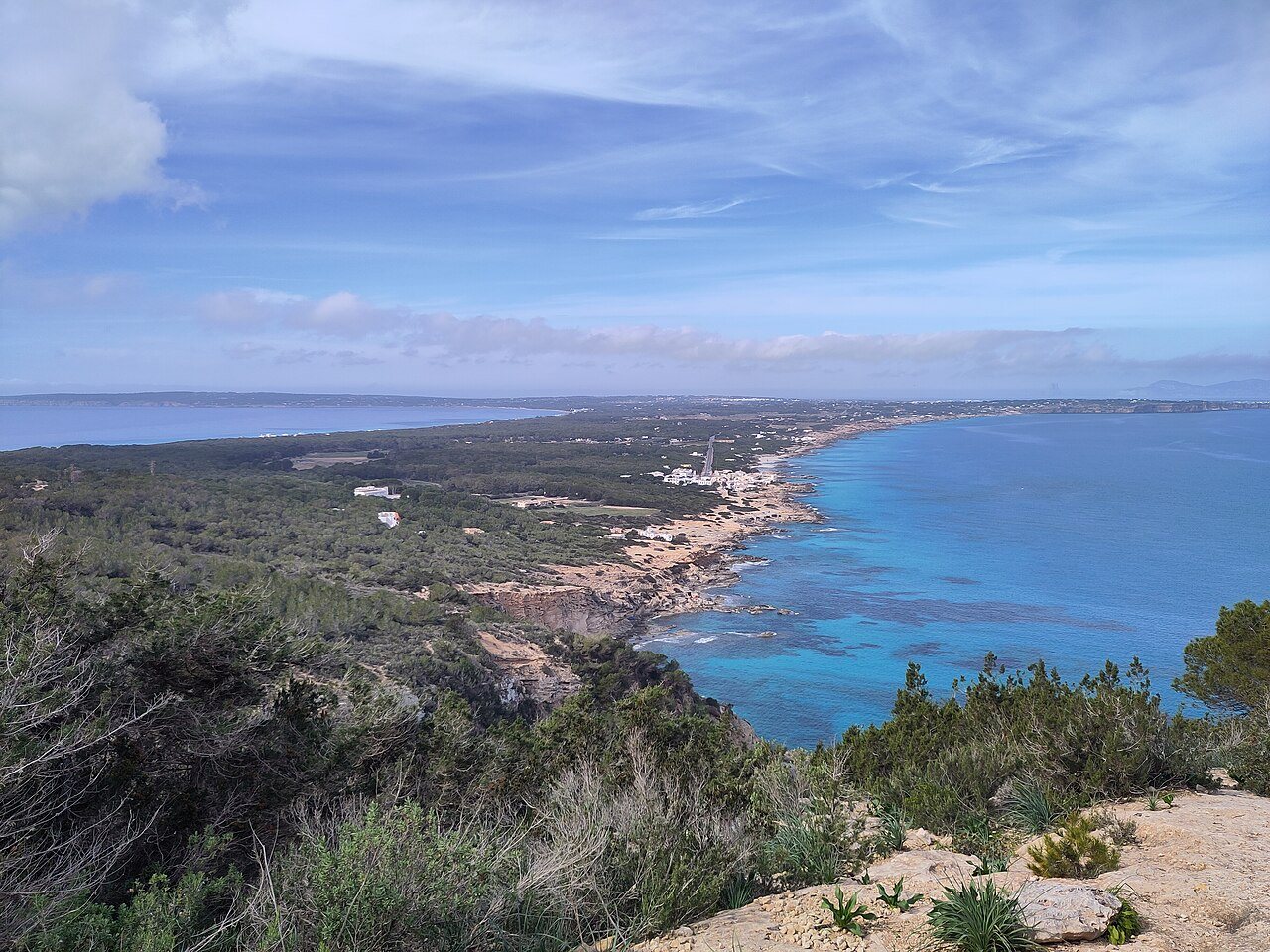
Views from the Camí de sa Pujada. Photo: Joan Gené, CC BY-SA 4.0
Route facts: distance, time and difficulty
- Green route: part of Formentera’s network of green routes.
- Route: from es Caló to la Mola (el Mirador), one way.
- Distance: 4 km.
- Time: about 80 minutes on foot.
- Difficulty: hard, because of the climb.
Route 24 (es Caló – Maryland, 1.4 km) also starts from es Caló and crosses the island to the Migjorn coast, and from the Racó de sa Pujada you can carry on along route 26 to es Ram (2.4 km). You’ll find them all in our guide to Formentera’s green routes.
Why walk this route on your visit to Formentera?
The Roman road is much more than an outing: it’s a journey into the past and a perfect experience for lovers of hiking, history and Mediterranean landscapes. As you climb, the view opens up over the north coast, the cliffs and the turquoise sea.
What you’ll find along the way
History at every step
You’ll walk a historic cobbled path, with natural viewpoints all the way up. Before the current road was built, this was the way up to la Mola.
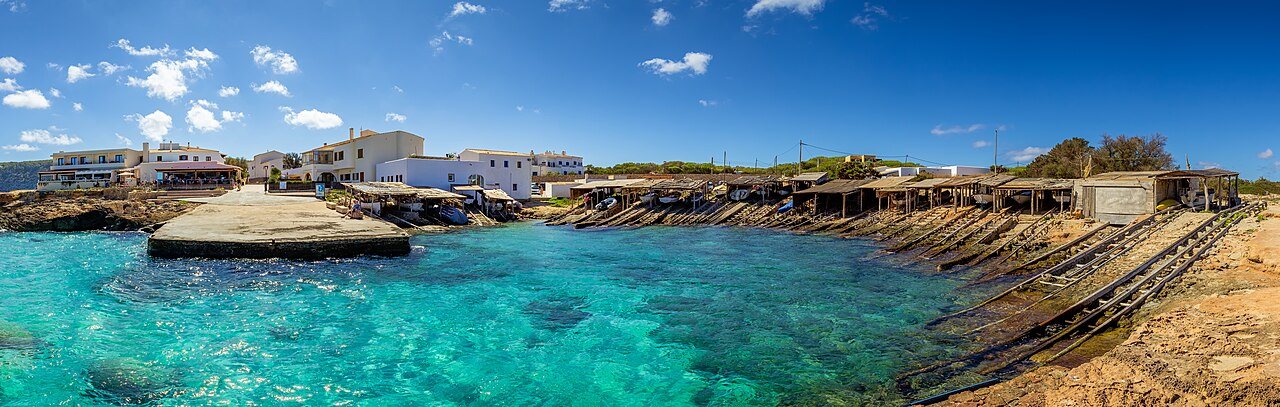
Es Caló de Sant Agustí. Photo: Fabian Hurst, CC BY-SA 4.0
The best views in Formentera
From the Racó de sa Pujada and the Pou des Verro you get some of the best panoramas on the island, with the contrast between the turquoise of the coast and the deep blue of the open sea.
The vineyards of la Mola
Near the top, the path runs past the vineyards of the Terramoll winery, a rural landscape very different from the beaches on the rest of the island.
Coves near the Roman road
The path starts by the sea, so you can combine the walk with a swim:
Es Caló de Sant Agustí
The starting point is a small fishing village with a natural harbour and wooden boat slipways, declared a Site of Cultural Interest (BIC) in 2002. It’s ideal for a swim before or after the walk and for a lunch of fresh fish.
Ses Platgetes
Right next to es Caló, on the north coast, these are three small sandy beaches separated by rocky stretches, with water that is usually calm in summer. Their rocky seabeds are great for snorkelling. More information in our guide to Ses Platgetes.
Es Copinar and Caló des Mort
Along route 24 you can cross to the south coast in about 25 minutes on foot: there you’ll find es Copinar, a quiet white-sand beach, and, five minutes further on, the little Caló des Mort.
Tips for walking the Camí de sa Pujada
- Wear suitable footwear: the path is cobbled and steep, so you need comfortable shoes with good grip.
- Bring enough water: especially in summer.
- Sun cream and a cap: some stretches are very exposed to the sun.
- Take it easy: it’s a 4 km climb; stop at the viewpoints to enjoy the scenery.
- Respect the environment: don’t leave litter and don’t stray from the path.
When is the best time to walk the Roman road?
You can do the route all year round, although spring and autumn are the best times thanks to the mild temperatures. In summer, avoid the middle of the day because of the heat.
Discover Formentera’s most authentic side on the Roman road and enjoy the views and coves of this stretch of coast. An experience you won’t forget!

