
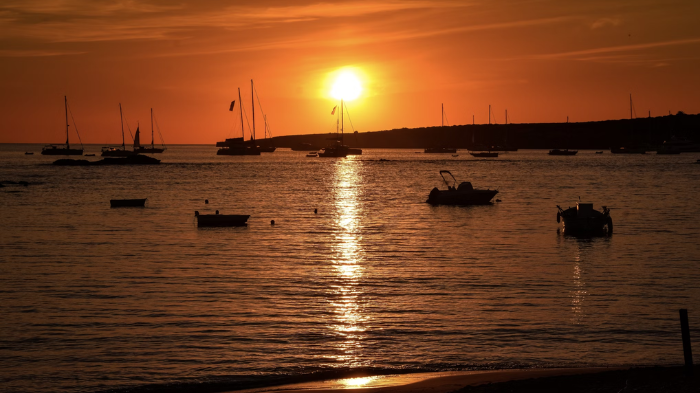
Formentera by boat: a photography guide to capturing its beauty
Bathed in Mediterranean sunshine and caressed by the sea breeze, Formentera is the perfect canvas for any photographer. Exploring it from the sea gives you angles that simply don’t exist from land. In this guide we tell you the best spots for photographing Formentera by boat and share tips to get the most out of your camera in this paradise.
Plan your photography route by boat
Before setting off, decide which places you want to photograph and when they will have the best light: the west coast (Cala Saona, Cavall d’en Borràs) shines in the afternoon, and the east coast in the morning. Have all your gear ready for the marine environment and check the weather forecast: with a calm sea, your photos (and your day) turn out much better.
Bear the qualification in mind too: since 1 October 2026, you need at least the navigation licence to skipper a hire boat, and it only allows you to sail by day and close to the coast. If you want to concentrate on your photos, go out with a skipper.
The best spots for photographing Formentera from the sea
Hidden coves and turquoise water
Formentera is dotted with coves and beaches with crystal-clear water that look their most stunning from the sea. With boat hire in Formentera you can reach spots that are hard to get to by land, such as s’Alga bay on s’Espalmador, and capture the contrast between the white sand and the turquoise water. Cala en Baster, on the north coast, also has a very photogenic curiosity: the caves that fishermen dug by hand into the sandstone to store their boats.
Cliffs and rock formations
Formentera’s cliffs are impressive from the water. Those at la Mola, some 100 metres high, and those at cap de Barbaria, at the southern tip, are the most spectacular. On the west coast, the cliffs of Punta Rasa, next to Cala Saona, hide underwater caves. Look for low angles, right at water level, to convey the sheer scale of these rock faces.
Formentera’s lighthouses
The island has three charming lighthouses: la Savina, on the rocks by the port; cap de Barbaria, above majestic cliffs and with one of the best sunsets in the Balearics; and la Mola, the most famous, on the edge of a cliff some 100 metres high. Photograph them at different times of day to play with the light.
Es Vedrà at sunset
From Formentera’s west coast, for example from Cavall d’en Borràs, you can see the silhouettes of es Vedrà and es Vedranell off the coast of Ibiza at sunset. It is one of the shots photographers most seek out.
Marine and landscape photography tips
Underwater photography
Formentera’s water is exceptionally clear thanks to its posidonia seagrass meadows, which makes it ideal for underwater photography. Use a waterproof camera or housing, snorkel or dive safely, and photograph marine life without touching or disturbing it.
Golden hour: the perfect light
Make the most of the golden light at sunrise and sunset to give your photos a magical feel. Experiment with different angles and compositions. If you are sailing with a navigation licence, remember that you must be back in port before sunset: you can photograph the last light from land.
Photography and conservation
Respect the environment while you take your photos and travel sustainably. Don’t leave litter, don’t disturb the wildlife and, if you anchor to take photos, drop anchor only on sand: anchoring on posidonia is prohibited in the Balearics.
Share your photos
Share your best photos of Formentera on social media to inspire other travellers and show the world the island’s beauty. Use relevant hashtags so they reach more people.
Photography gear for a day on a boat
Bring waterproof gear, or at least a dry bag, if you are going to take photos from the boat or underwater. Also bring spare batteries and memory cards so you don’t miss a single moment, and a cloth to wipe spray off the lens.

