

Saltwater nature in Formentera: Estany des Peix and Estany Pudent
Formentera is known for its turquoise water and idyllic beaches, but it also has spots that reveal its wilder, quieter side. Two of them are the Estany des Peix and the Estany Pudent, two saltwater lagoons in the north of the island, next to la Savina, which are part of ses Salines d’Eivissa i Formentera Natural Park.
They are areas of great biodiversity, with peaceful surroundings and spectacular views. If you want to see the coastline here from a different angle, boat hire in Formentera is an excellent option: we set off from the port of la Savina, just a stone’s throw from both lagoons.
Estany des Peix: what it is and where to find it
The Estany des Peix is the smaller of Formentera’s two large lagoons. It lies next to the port of la Savina and connects to the sea at a single point, known as sa Boca. That is why its water is calm and shallow, and it has always been a refuge for small, shallow-draught boats.
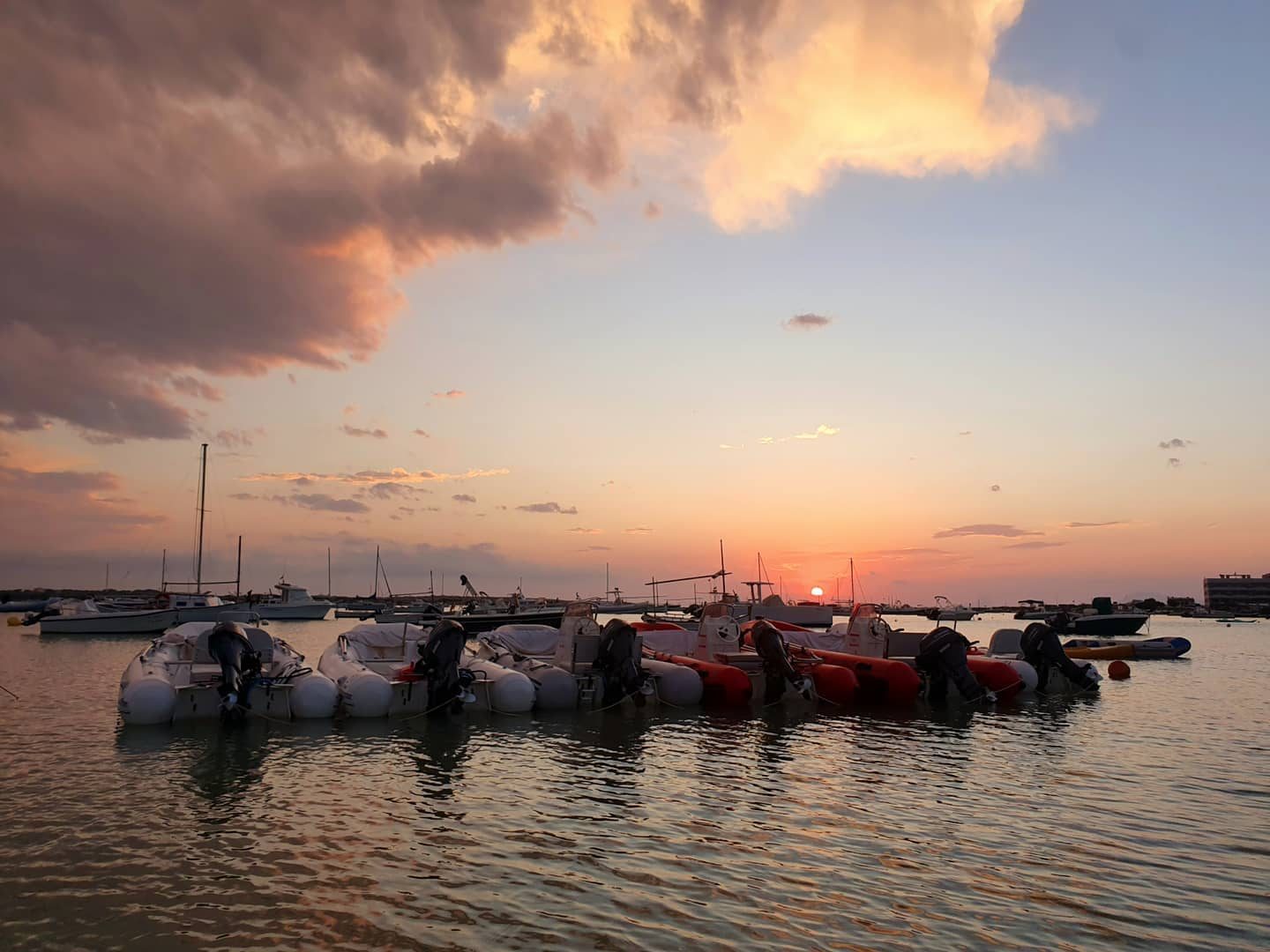
Sunset at the Estany des Peix. Photo: Isla Azul Formentera
Things to do at the Estany des Peix
- Kayaking and dinghy sailing: its sheltered water is ideal for a relaxed paddle or sail.
- Walking along the shore: you can walk all the way round it, and it is a good spot for birdwatching.
- History: on its eastern shore stand the ruins of the old prison camp where Republican prisoners were held during the Spanish Civil War, now a listed Site of Cultural Interest (Bien de Interés Cultural).
Can you anchor or fish in the Estany des Peix?
Anchoring: no, unless authorised. The lagoon is a regulated anchorage: only authorised boats may moor at its pontoons and buoys, and dropping anchor or laying moorings is prohibited. Hire boats cannot anchor inside it.
Fishing: it is regulated. The lagoon is a fish nursery, and in 2014 the Balearic Government banned trolling and fluixa line fishing there. If you want to fish, check the current regulations first and bring your recreational fishing licence.
Estany Pudent: Formentera’s great salt lagoon
A few minutes from the Estany des Peix lies the Estany Pudent, the largest lagoon in Formentera: around 3.5 km² and up to 4 metres deep. Its water is hypersaline and is barely renewed; it connects to the sea through sa Sèquia, a man-made channel. Its name (“pudent” means “smelly” in Catalan) comes from the smell it could give off in summer. It used to be called the estany dels Flamencs, because of the number of flamingos that gathered here.
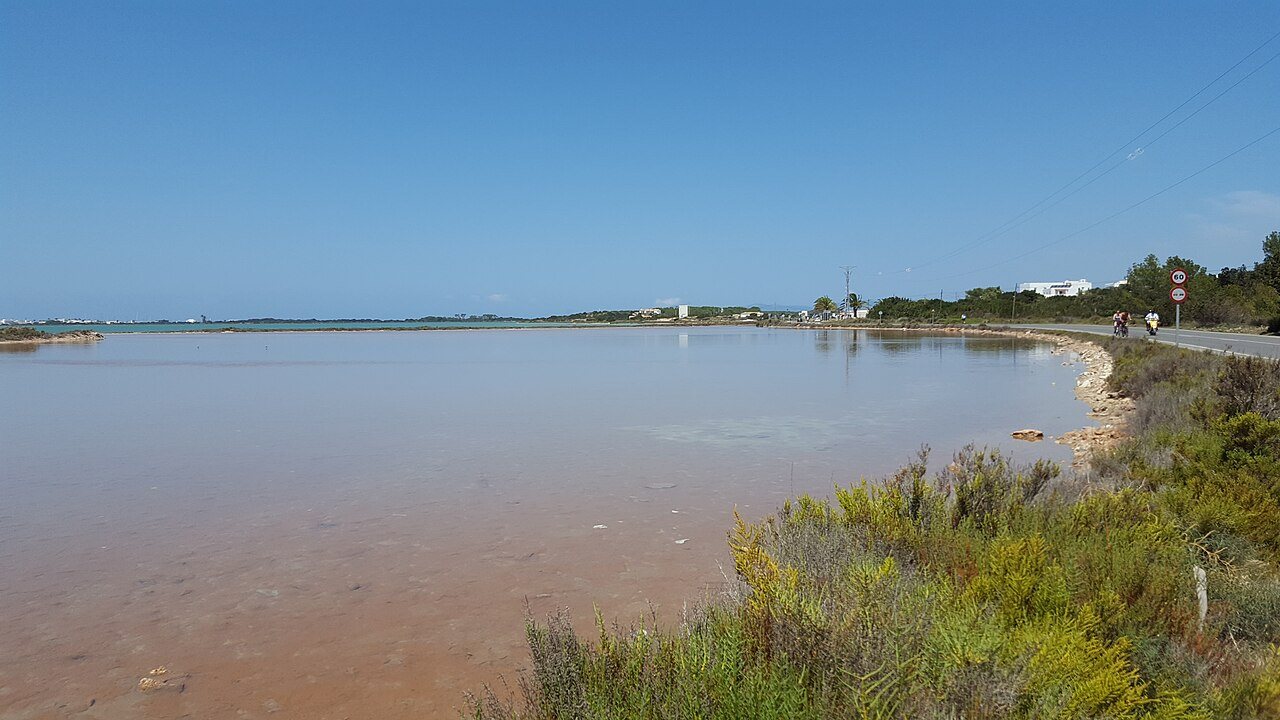
Estany Pudent. Photo: Formesar, CC BY-SA 4.0
The ecological importance of the Estany Pudent
It is the place with the greatest biodiversity on the island and the best spot for birdwatching. From the road between la Savina and es Pujols you can see flamingos, storks and common shelducks, and every year large numbers of waders, ducks and herons gather here. It is also home to one of the largest concentrations of black-necked grebes in Europe, sometimes thousands of birds.
What to do at the Estany Pudent
Walking and cycling routes
The camí de es Brolls track runs along much of the shore and lets you see the birds up close. Along its edges, small freshwater springs feed the vegetation where many species nest.
Birdwatching
Don’t forget your binoculars. On calm days, when the water is as still as a mirror, the flocks of grebes are quite a sight.
Sunset photography
As evening falls, the golden light reflects off the salt water, creating a natural mirror in which the flamingos and other birds seem to dance on the horizon.
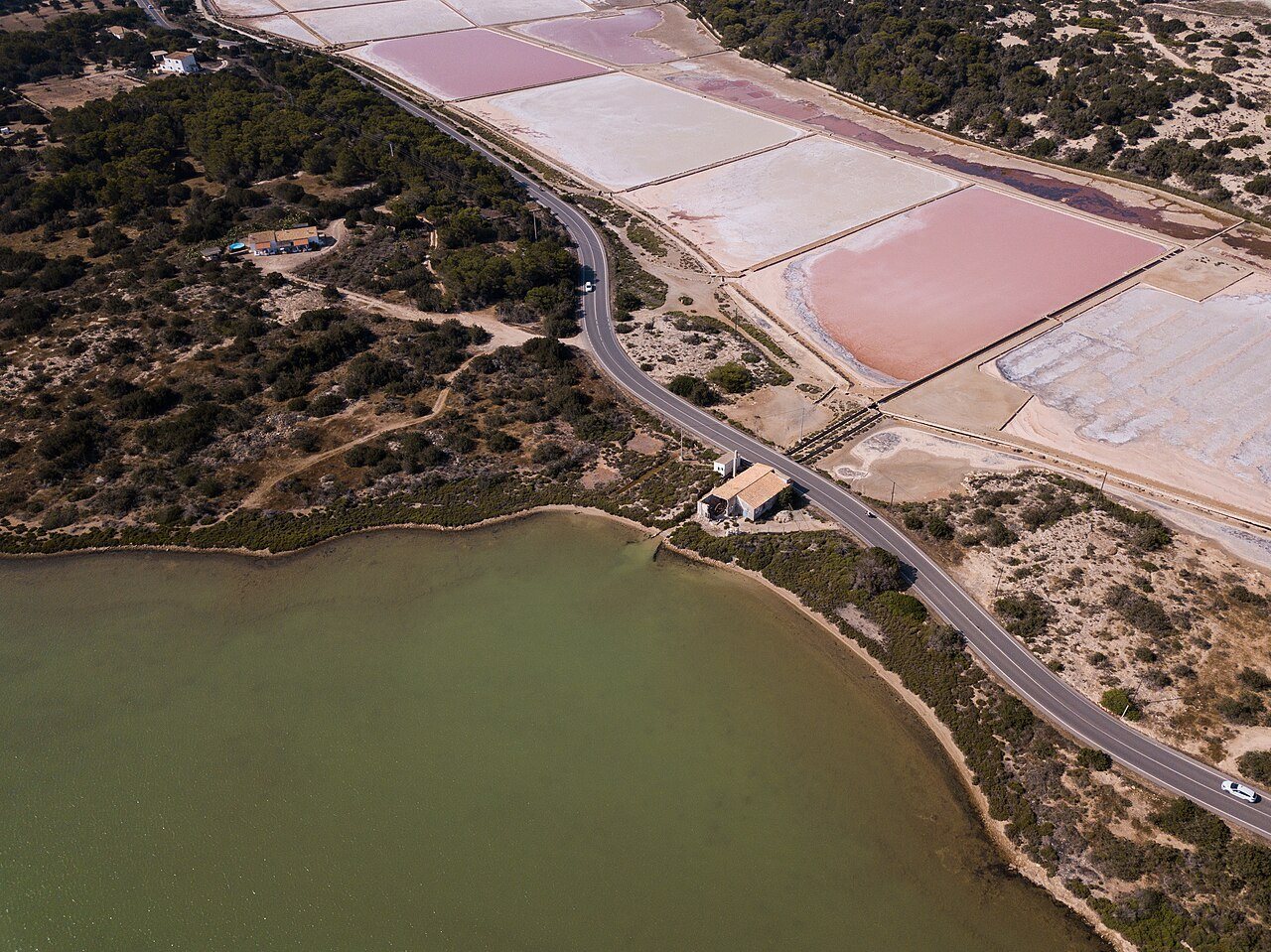
Ses Salines de Formentera. Photo: Beni Marull, CC BY-SA 4.0
History of Formentera’s salt pans
Salt was the island’s only industry before tourism arrived. The salt pans already existed in Muslim times, as recorded in documents from the Christian conquest. Between the 14th and late 17th centuries the island was virtually uninhabited and production was abandoned. In 1897 the owner of the Ibiza salt pans bought Formentera’s, and the company Salinera Española worked them until 1984.
To fill the ponds where the salt crystallised, brackish water was pumped from the Estany Pudent with a paddle wheel, the màquina d’en Paya. Since 2004 the salt pans have been a Site of Cultural Interest as a historic site, and today they are part of ses Salines Natural Park, protected for their ecological and scenic value.
Tips for visiting the Estany des Peix and the Estany Pudent
- Best time to go: spring and autumn are ideal for seeing migrating birds and enjoying pleasant temperatures.
- What to bring: a camera, binoculars and comfortable clothes for walking or water activities.
- Respect the environment: this is a protected area. Don’t leave litter, stay on the paths and don’t disturb the birds.
How to get to the Estany des Peix and the Estany Pudent
Both lagoons are right next to the port of la Savina, so they are just a few minutes away by car, motorbike or bike. The best ways to explore the area are on foot or by bike, along the Consell de Formentera’s green routes.
Recommended cycling routes
- La Savina–ses Illetes green route (route 1): 3.3 km, flat and easy. It starts at the salt pans, follows sa Sèquia, the Estany Pudent’s channel, and passes the old salt mill (molí de sal) and Cavall d’en Borràs beach.
- Sant Ferran–es Pujols–Estany Pudent green route: 2.2 km that bring you close to the lagoon’s eastern shore.
Why visit the Estany des Peix and the Estany Pudent?
These spots show a different side of Formentera, far from the bustle of the beaches. They are perfect for birdwatching, paddling at a gentle pace and getting to know the island’s salt-making history.
Don’t miss these peaceful places full of biodiversity, and enjoy a day of saltwater nature in Formentera. You will be surprised to discover a different side of the island!

