

The prettiest villages in Formentera: a visitor’s guide
Get to know Formentera’s most charming villages: history, local culture and places you shouldn’t miss on your visit to the island.
The other side of the island
Beyond the beaches, Formentera has an inland world full of life: small villages where time seems to slow down, with white churches, quiet squares, traditional farmhouses and cafés where you can linger over a drink.
These villages aren’t big or spectacular, but they have something special. They are part of the island’s identity.
Sant Francesc Xavier
This is the island’s capital. It’s home to the Consell de Formentera (the island council), the main services and a lively square. The fortified church, completed in 1738, is one of its symbols: it was built as both a place of worship and a defensive refuge against pirate raids.
In its streets you’ll find local shops, restaurants and terraces for breakfast or an evening glass of wine. From May to October there are craft stalls in the centre, and on Tuesday and Saturday mornings a second-hand market behind the church.
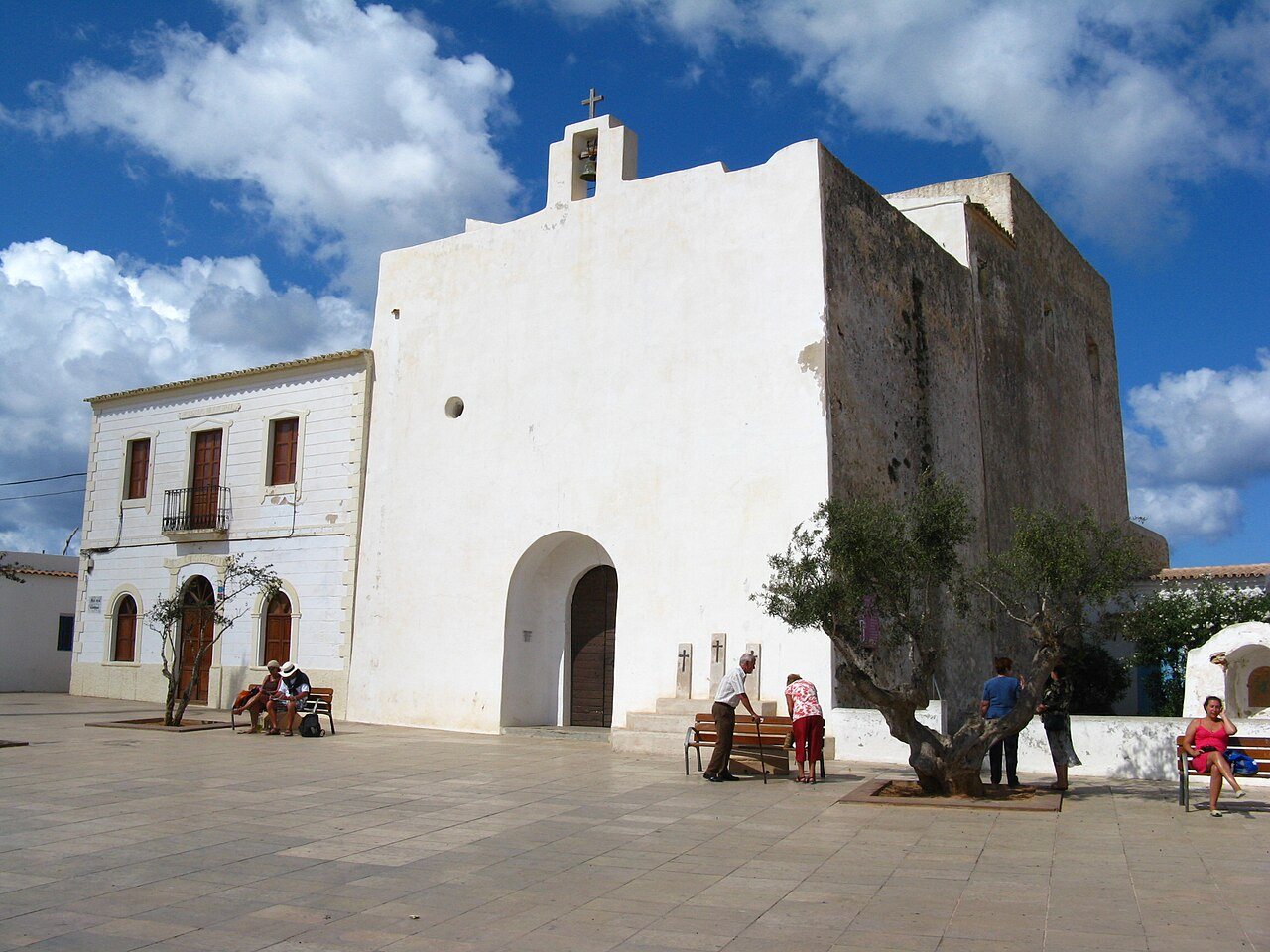
Sant Francesc Xavier. Photo: Marcin Janeczek, CC BY 3.0
Sant Ferran de ses Roques
A village with the soul of a crossroads. In the 1970s it was a meeting point for hippies and bohemians, who gathered at the legendary Fonda Pepe. Open since 1953, it’s still going strong: by day it serves simple food, and at night it fills with a lively bar atmosphere.
Today it is still a place with its own character, with bars and relaxed nightlife. In season there is an evening arts and crafts market, and on Fridays from May to October there are concerts in the square. Its small church, opened in 1889, is a listed Site of Cultural Interest (Bien de Interés Cultural).
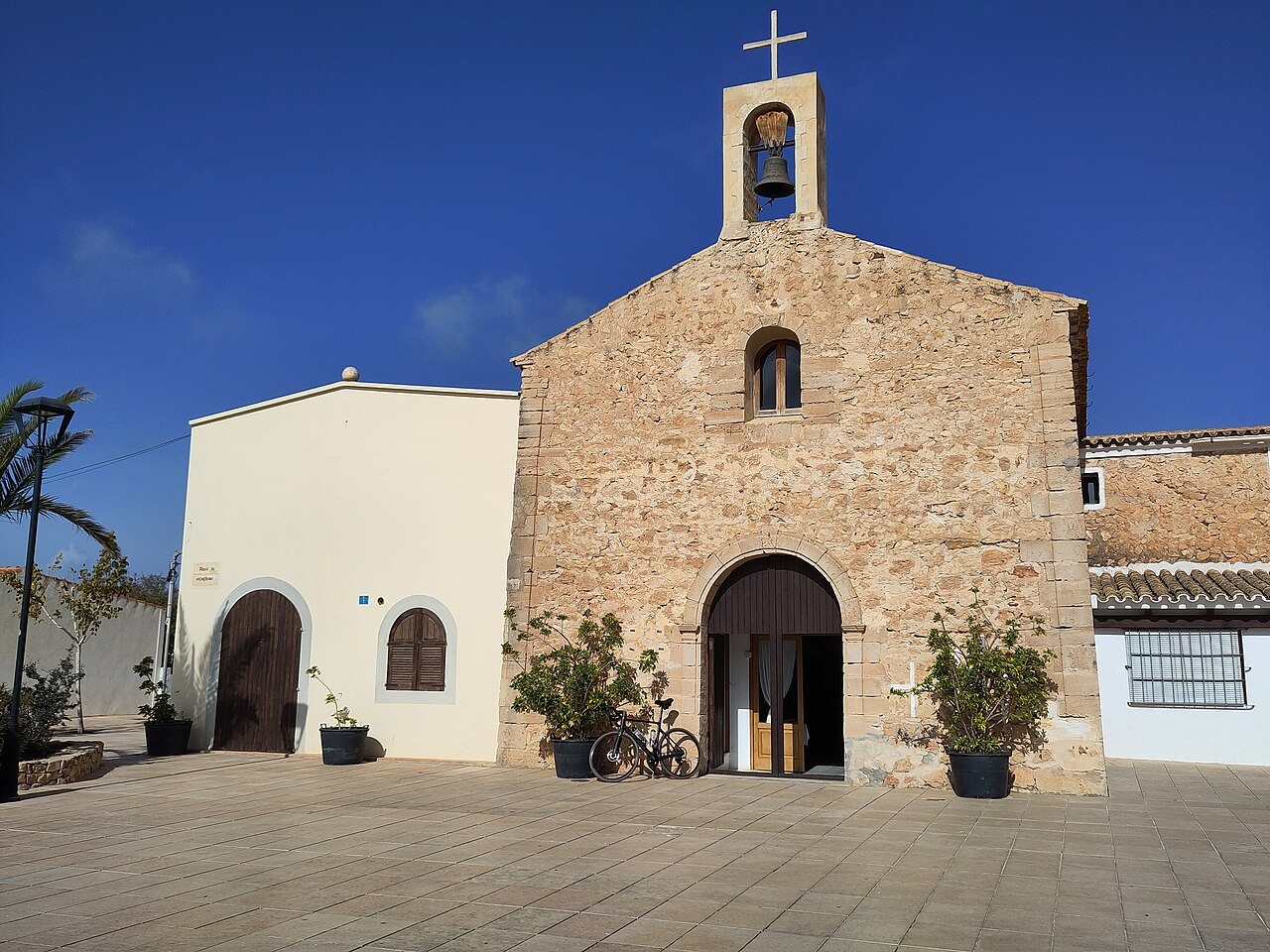
Sant Ferran de ses Roques. Photo: Joan Gené, CC0
El Pilar de la Mola
High on La Mola plateau, at the eastern tip of the island, this is Formentera’s most remote village. The road up to it is worth the trip in itself. Once there, you’ll find a quiet, rural atmosphere, with open views and plenty of countryside all around.
Here you’ll find the Molí Vell, an old windmill that can be visited in summer, and the island’s most famous craft market, open on Wednesday and Sunday afternoons from May to October. La Mola lighthouse is a few kilometres away, at the end of the road. It’s perfect for a half-day trip.

El Pilar de la Mola from the air. Photo: Sergio G. Cañizares / Diario de Ibiza
Es Caló de Sant Agustí
More than a village, it’s a small fishing settlement. It has a harbour with traditional boathouses, listed as a Site of Cultural Interest in 2002, low houses and restaurants with terraces by the sea. One of the most beautiful walks on the island starts here: the Camí de sa Pujada, which climbs up to El Pilar de la Mola.
It’s the perfect place for good fish or a rice dish, a stroll by the sea and a break from the noise.
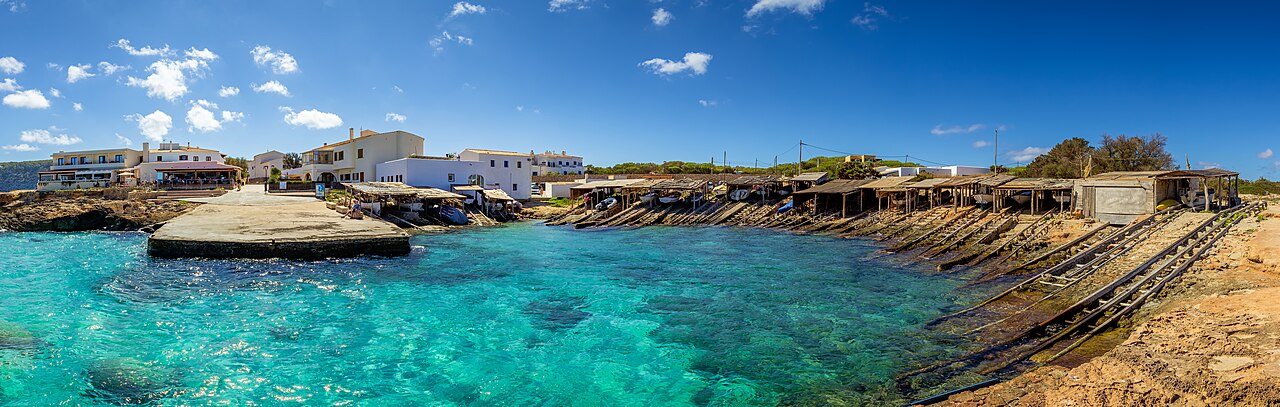
Es Caló de Sant Agustí. Photo: Fabian Hurst, CC BY-SA 4.0
La Savina
This is the island’s gateway port, where the ferries from Ibiza arrive. It may not be the prettiest village, but it has its charm: boats coming and going, a promenade with bars and restaurants overlooking the harbour, a small market that opens every evening in season and lovely sunsets from the west side of the port.
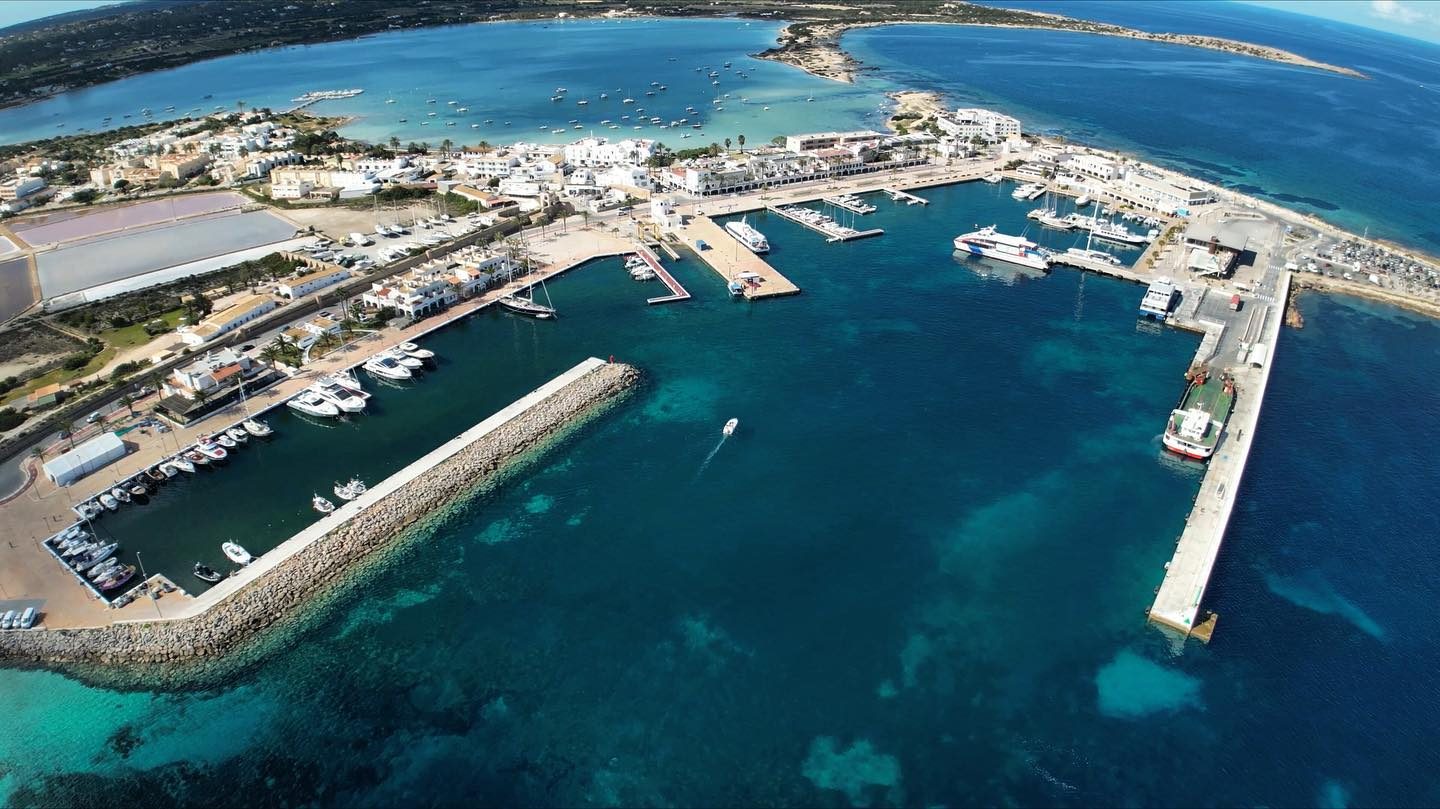
La Savina. Photo: Isla Azul Formentera
It’s also the starting point for boat hire in Formentera, ideal if you want to explore the island from the sea or reach coves that can only be accessed by water.
Villages that keep their essence
The best thing about Formentera’s villages is that they have kept their authenticity. There are no big developments or shopping centres: just simple streets, white façades and a way of life that is still tied to the land, the sea and the gentle rhythm of everyday life.

