

Formentera’s dunes: exploring ses Illetes and s’Espalmador
Formentera’s dunes are one of the most striking natural attractions in the Balearic Islands. These sand formations shape the island’s landscape and create an idyllic setting for relaxing and getting close to nature. They are at their finest on the es Trucadors peninsula, home to the famous ses Illetes beach, and on the islet of s’Espalmador, two unmissable spots in ses Salines Natural Park. An excellent way to discover them is boat hire in Formentera, which lets you explore the coast and enjoy unique views from the sea.
Ses Illetes, an idyllic beach
Ses Illetes is regarded as one of the most beautiful beaches in the world, with fine white sand and crystal-clear turquoise water. It lines the western side of es Trucadors, a narrow tongue of sand with sea on both sides: ses Illetes to the west and Llevant beach to the east. Its dune system is home to many native plants adapted to the intense sun, salt and wind, and it is protected with fenced-off areas and access boardwalks.
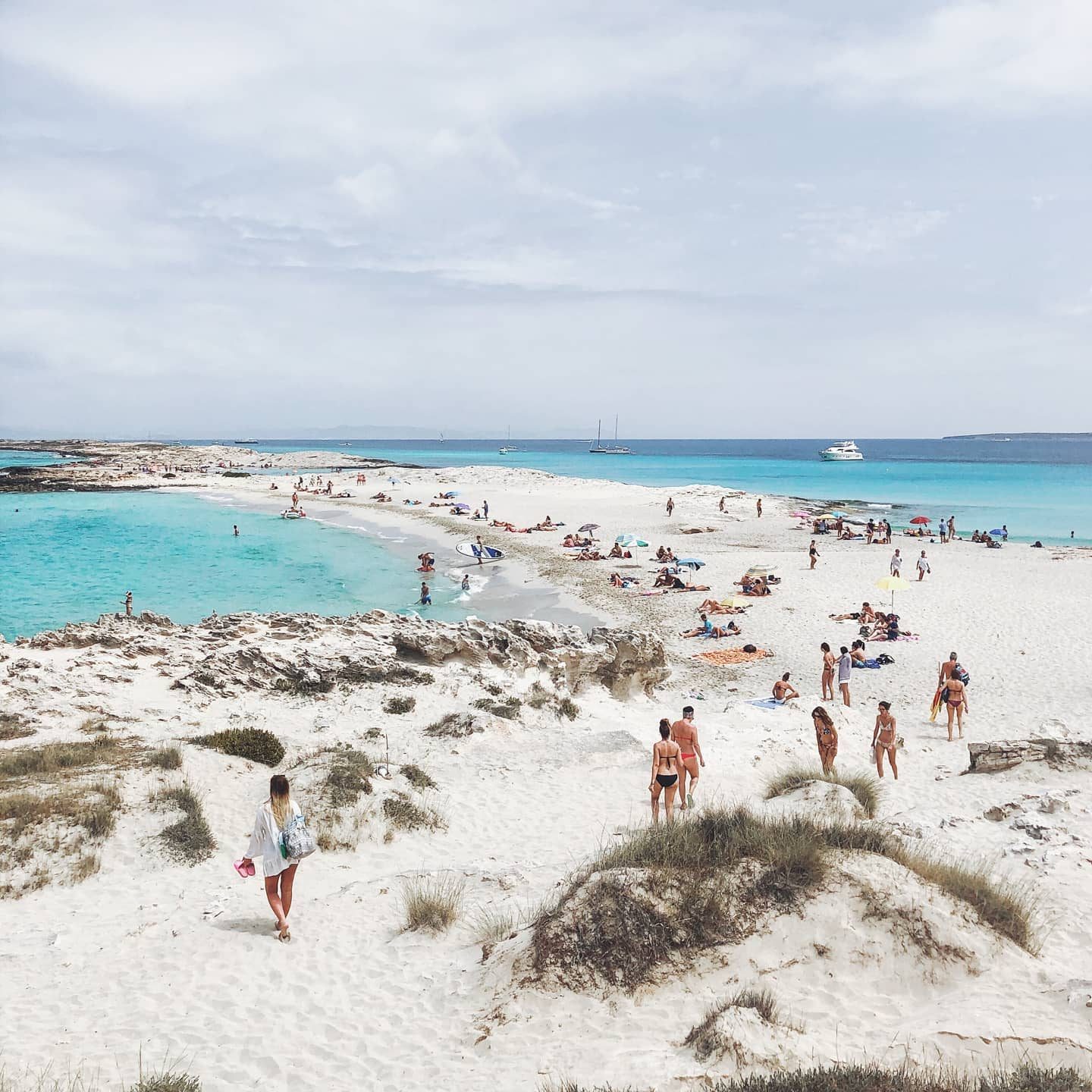
Ses Illetes dunes. Photo: Isla Azul Formentera
S’Espalmador, the unspoilt islet
Just north of es Trucadors lies s’Espalmador, another must-see that will amaze you with its unspoilt surroundings. It is a privately owned islet, but it is part of ses Salines Natural Park and its beaches, such as s’Alga bay, are public. Its secluded beaches, free of buildings, are perfect for anyone looking for complete peace and quiet.
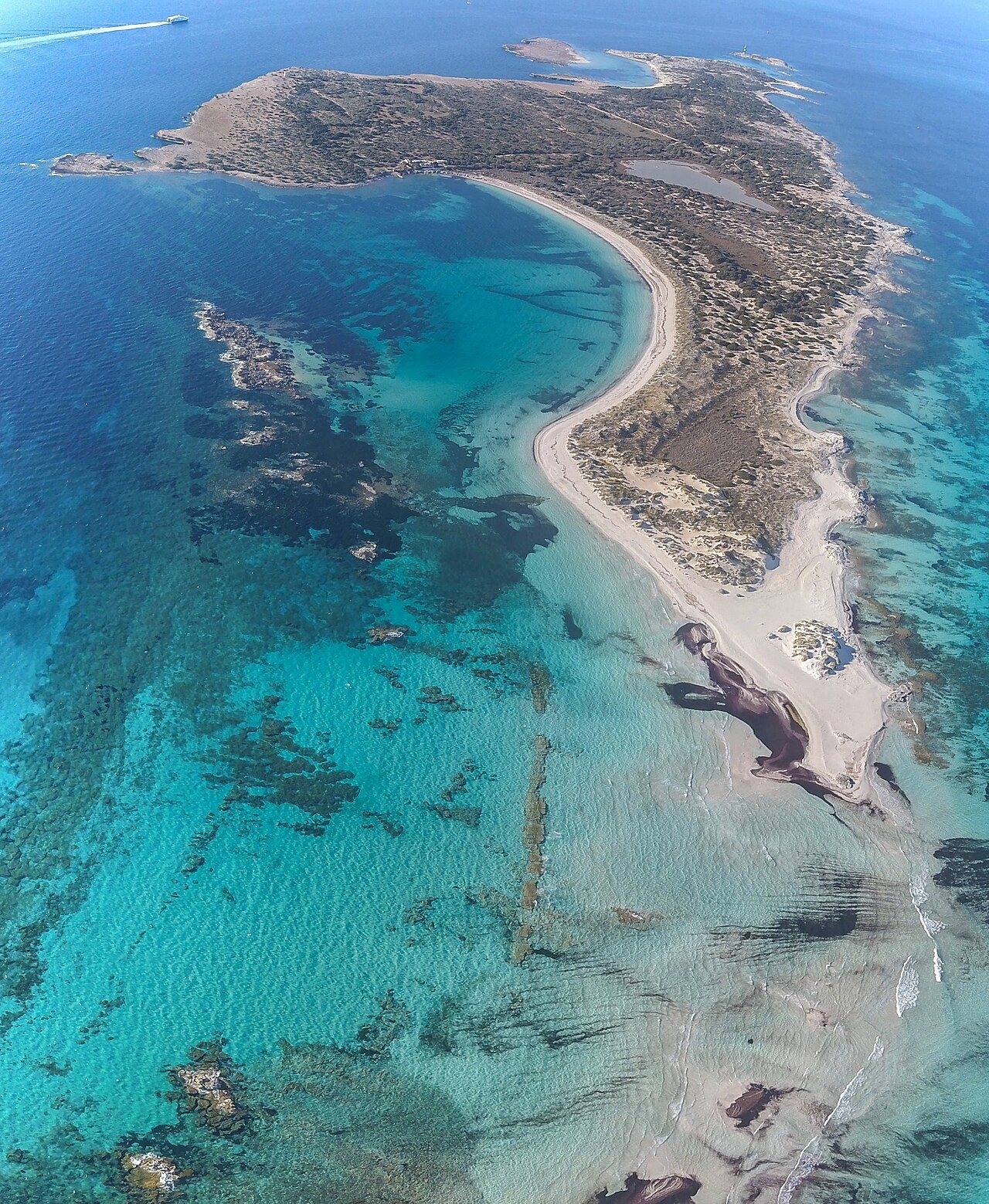
The island of s’Espalmador. Photo: Beni Marull, CC BY-SA 4.0
How to get to ses Illetes and s’Espalmador
You can reach ses Illetes by land or by sea:
- On foot or by bike: entry to the natural park is free. The La Savina–ses Illetes green route is 3.3 km long and flat (about 15 minutes by bike or 50 on foot).
- By bus: there is a bus route from the port of la Savina to ses Illetes.
- By car or motorbike: in season, access is regulated, with a vehicle cap and a fee. In 2026 the scheme ran from 10 May to 15 October, with non-resident fees of €5 to €7 per car and €3 to €5 per motorbike depending on the fortnight. Electric vehicles get in free.
- By boat: arriving by sea is the easiest way to avoid the traffic and the parking.
S’Espalmador can only be reached by sea. Wading across from the tip of es Trucadors is prohibited because of the strong currents. If you come by boat, tie up to the buoys in the s’Alga mooring field and never anchor on the posidonia seagrass: it is prohibited in the Balearics. Since 1 October 2026, you need at least the navigation licence to skipper a hire boat; if you don’t have one, you can go out with a skipper.
What to do on Formentera’s dunes and beaches
Beyond their beauty, visiting Formentera’s dunes and unspoilt beaches is a unique chance to connect with nature. Follow the boardwalks to spot the birds and plants of the dunes, without stepping into the protected areas. Snorkelling is another highly recommended activity: the crystal-clear water and posidonia seagrass meadows are ideal for watching marine life. And to reach the quietest spots, nothing beats boat hire in Formentera, which lets you explore the coast with complete freedom.
Please note that mud baths in the s’Espalmador lagoon are prohibited under the natural park’s rules.
An unforgettable experience
Visiting Formentera’s dunes and unspoilt beaches will reveal breathtaking landscapes and give you a truly authentic experience. A Mediterranean paradise that wins you over from the very first moment and that you will always remember as a place of calm, beauty and harmony.

